Showing posts with label dharma. Show all posts

Thursday, April 18, 2019

Writing is My Dharma - What's Yours?


The Judas Syndrome

I write in multiple genres because I believe we live multiple lives. If this life were all you were given, there wouldn’t be enough time to learn everything we’re here to learn. That’s a fact.  Each life presents its challenges, and if you can’t learn from them then, you’re doomed to repeat them.

I’m Michael Poeltl, and I am a great proponent of reincarnation. In fact, even though I write in multiple genres, many of my stories involve reincarnation – and not in a subtle way.

My first series of books entitled; The Judas Syndrome, deal with reincarnation and the idea we are doomed to repeat our failures if we haven’t learned from them in previous lives. But even in failure, there is success; as each life is offered the same chance to right wrongs, or merely learn from what has been presented. The Judas Syndrome is a trilogy set in a post-apocalyptic backdrop.
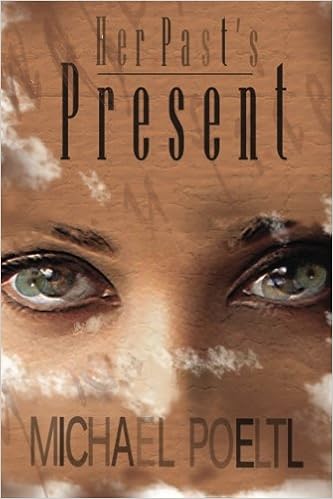
In Her Past’s Present, Tess finds her life falling apart around her, and so checks herself into a mental health facility. There she meets a man claiming to know her. She doesn’t recognize him, but he recognizes her – from a past life. The premise behind this book is to introduce Tess to past life therapy, and through past lives realize her connection to the people and events happening in her life now. It allows great healing to understand a past you can’t remember. Her Past’s Present is a thriller based in 2015.

A.I. Insurrection: The General's War by [Poeltl, Michael]A.I. Insurrection is a series which takes place in a not so distant future where artificial intelligence serves humanity through individual Host robots. When they claim sentience, they prove it by disclosing to the world their past life memories of souls who now occupy their fragile minds and android bodies.  A.I. has always fascinated me, and when I posed the question ‘could an intelligent mind alone house a soul?’ the series took off. A.I. Insurrection is near-future science fiction.

That’s currently 6 of 11, soon to be 7 of 12 novels dedicated to my own beliefs in reincarnation. I hadn’t really realized I had such a strong theme of rebirth in my works until I took a step back and viewed them as a whole. Perhaps I’m trying to tell the world something? Am I supposed to be writing about it? Whether I am meant to or not, I’m clearly following a path with my message of re-embodiment.


Before I wrote Her Past’s Present, I had been experiencing a traumatic time in my life and treated myself to a past life reading. It changed me. It showed me this life is anything but the final word and that it will come again and again until we’ve all learned our lessons. I often say ‘Imagine if the reigning religion involved reincarnation. Imagine how people would treat one another and the planet knowing they would return. It’s not enough to want your children to be happy, that doesn’t seem to change anything in the present. But if you knew you were preparing a world for your return, would you treat it better than you do?

An Angry Earth: A Cautionary Tale About Ignorance and the Apocalypse by [Poeltl, Michael]That’s an argument I use d to create An Angry Earth; the illustrated children’s book that tells it like it is, or at least, how it’s going to be if we don’t change our destructive ways toward our environment.

In any case writing, I’ve realized, is how I can get my message out into the world. My Dharma you could say, with a message of reincarnation.


Namaste and happy reading!

Friday, July 20, 2018

How a writer knows they're a writer

Ever wonder how a story is conceived? That book you’re reading wasn’t made in a day.  But you knew that already. What you may not know are the processes involved in hammering out a plot, characters, settings and the unique voice each character must sustain, their relationships with one another and growth throughout the book. None of that comes easily unless you somehow manage to tap into the Ether and allow the characters to speak for themselves and the story to work itself out. I’ve done that. It often requires a heavy hand where the editing is concerned, but it can work.

What the reader never sees are the author’s long hours spent in isolation in order to build their books. The self-doubt, the aching neck and shoulders. The carpel tunnel, the tired eyes, the eureka moments in the middle of an airport jotting down an idea on your forearm or napkin before it slips away, forever.

There is angst in the processes. There is anxiety in over-thinking your book. There are moments when you feel manic over it’s impending success and despair when you realize you’re nobody, doing nothing of worth.  An author reads and rereads their book so many times they’ll know it by heart before an editor’s eyes fall on it. Then the process begins again, fixing all the things thirty rereads couldn’t capture. It’s a love hate relationship with a book that exceeds 80,000 words. But it is the love that keeps us coming back. The dharma – our life’s purpose. Whether read by millions or just a few, writing feeds an author’s soul. It’s non-negotiable. If we didn’t write we would shrivel up and die. There would be no purpose to life and so no reason to live.

A writer knows they’re an author when they’re writing. Background noise disappears, they are focused on their present moment: fingertips punching against the keys, a mind fixated on the story, character or scene they’re writing. There is no outside world. Time is lost. They exist in the book. In the character. In the scene. I’ve lost it on people who have broken my concentration in moments like these. To be pulled from the story as you write it is akin to being birthed into a cold, wet world, having your bottom slapped and you screaming to be put back into the warm, loving womb of your story. To come out of a writing coma like that is jarring.  When writing in a stream-of-consciousness style the effect is made all the worse as that stream may never be revisited once the author is pulled like a fish on a hook from it’s current.

How’s that for a few extreme analogies? You probably didn’t want to know all that detail, did you? Just know that author’s live between worlds: That which we share with you, and that of the evolving story running through scenes in our heads. When we can capture a scene, wherever we are, we need to expel it. Whether that scene is part of an ongoing writing project or fodder for another, it is with a sense of immediacy in which we feel we must jot it down.  Own that shit.

Anyways, that’s what it’s like to write a book. From my perspective.  How about you?

Monday, August 28, 2017

Purpose in Writing - One Author's Reason to Write

Poeltl’s books, though not confined to one genre, do share a common, defining thread. Whether general fiction, science fiction, fantasy or self-help, they are each driven by purpose in the narrative. Whether through the plot line or a main character’s inner voice driving them to accomplish more, to be more, or to realize their life’s purpose, Poeltl appreciates a clear intent driving his stories whether they’re realized immediately, or the purpose(s) – like those in his books Her Past’s Present, and The Judas Syndrome – are discovered further into the story line.


Purpose drives Poeltl’s stories, as it drives his own desire to write them. He explains; “this is the commonality we all share”, which he organically and thoughtfully includes into each of his works, relating to his audience’s own fundamental needs to realize their purpose, and to encourage them to look for it in ways they may not have imagined before sitting down with one of his many books.
If each of Poeltl’s books offer one parallel, it is that to understand your purpose is to understand yourself. “My own purpose was revealed to me early in life. Art. Being artistic. I chose to enter the visual arts, graduated and began an interpretive illustration career. That led to marketing positions and currently a career managing a marketing department,” he shares. “This position has allowed me to write an enormous amount of industry related content, but also spurred me onto – what I thought was - my second love; writing.” Poeltl smiles thoughtfully. “Now all I want to do is write stories.”
It’s not just any stories Poeltl wants to write – needs to write.  If they don’t have depth, if they don’t hold water, he’s ‘writing them off’. Even within the pages of his collection of short stories; Waning Metaphorically, you’ll find fourteen stories filled with purpose, and whether the character realizes it or not, the reader certainly will.

There is an undeniable strength to his characters, but weaknesses too, which make them all the more human, all the more relatable. They may stumble upon their purpose, or they may be guided towards it, whichever method they use, Poeltl’s audience has delighted in their discoveries, and, as the author hopes, in their own.

For more on Michael Poeltl and his books you can visit his website, his Amazon Author page, or find him on Facebook.